







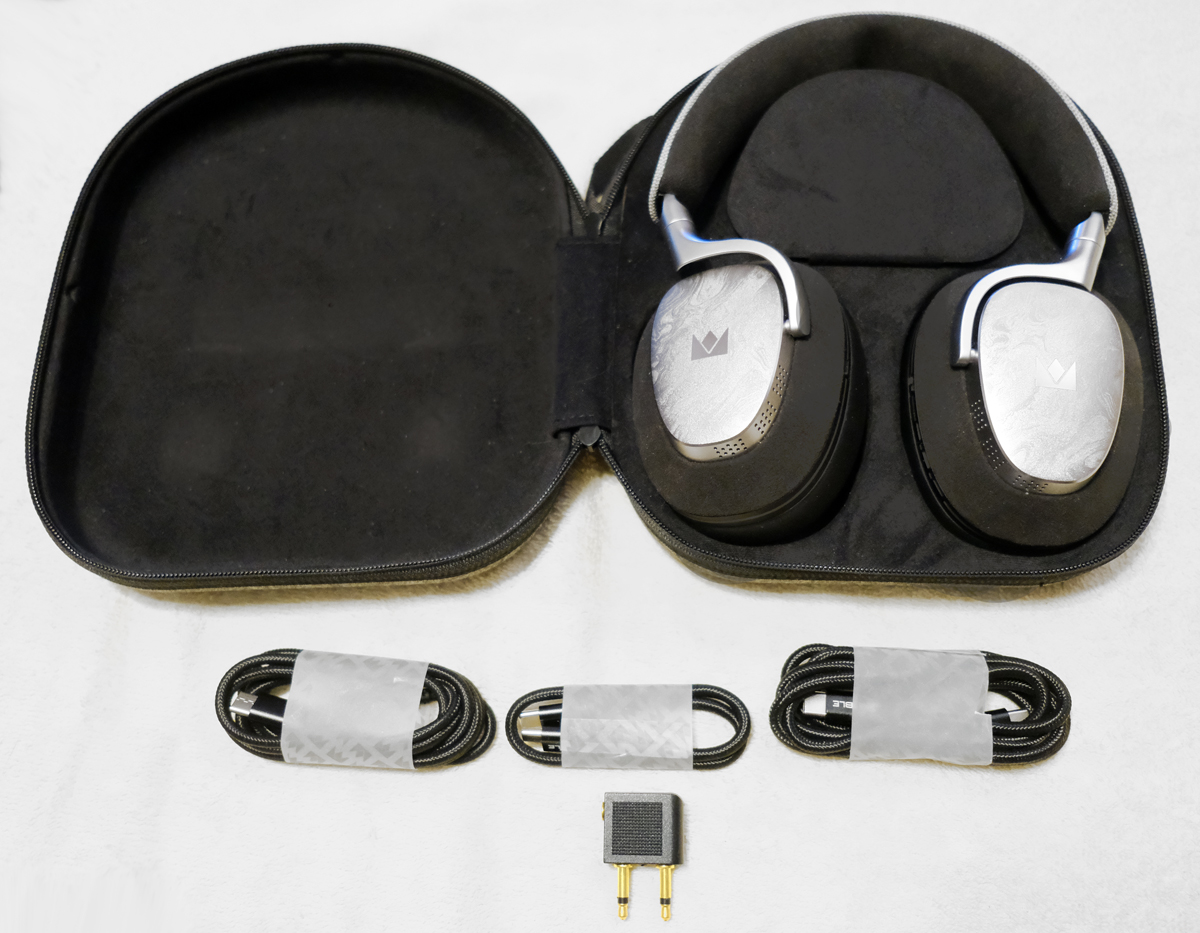
Back in 2024, when I reviewed the Noble FoKus APOLLO Hybrid True Wireless Headphone, it was clear that it was something special; not only was it the best-sounding true wireless headphone I had heard to date, it was a true contender as a headphone in its price category, outperforming many $700 headphones, period. I also found the noise-cancelling to be exceptional, cutting out low-frequency background noise without changing the sonic characteristics of the headphone itself, not an easy accomplishment. So when Jim at Noble told me that they would soon be releasing an upgrade, I found myself chomping at the bit. Enter the Noble Audio FoKus ARTEMIS Hybrid True Wireless Headphone, of which I was able to pry a review sample from Noble at CanJam SoCal 2026 despite the demand currently outstripping production (I took one of the show demos).
The Noble Audio FoKus ARTEMIS Hybrid True Wireless Headphone
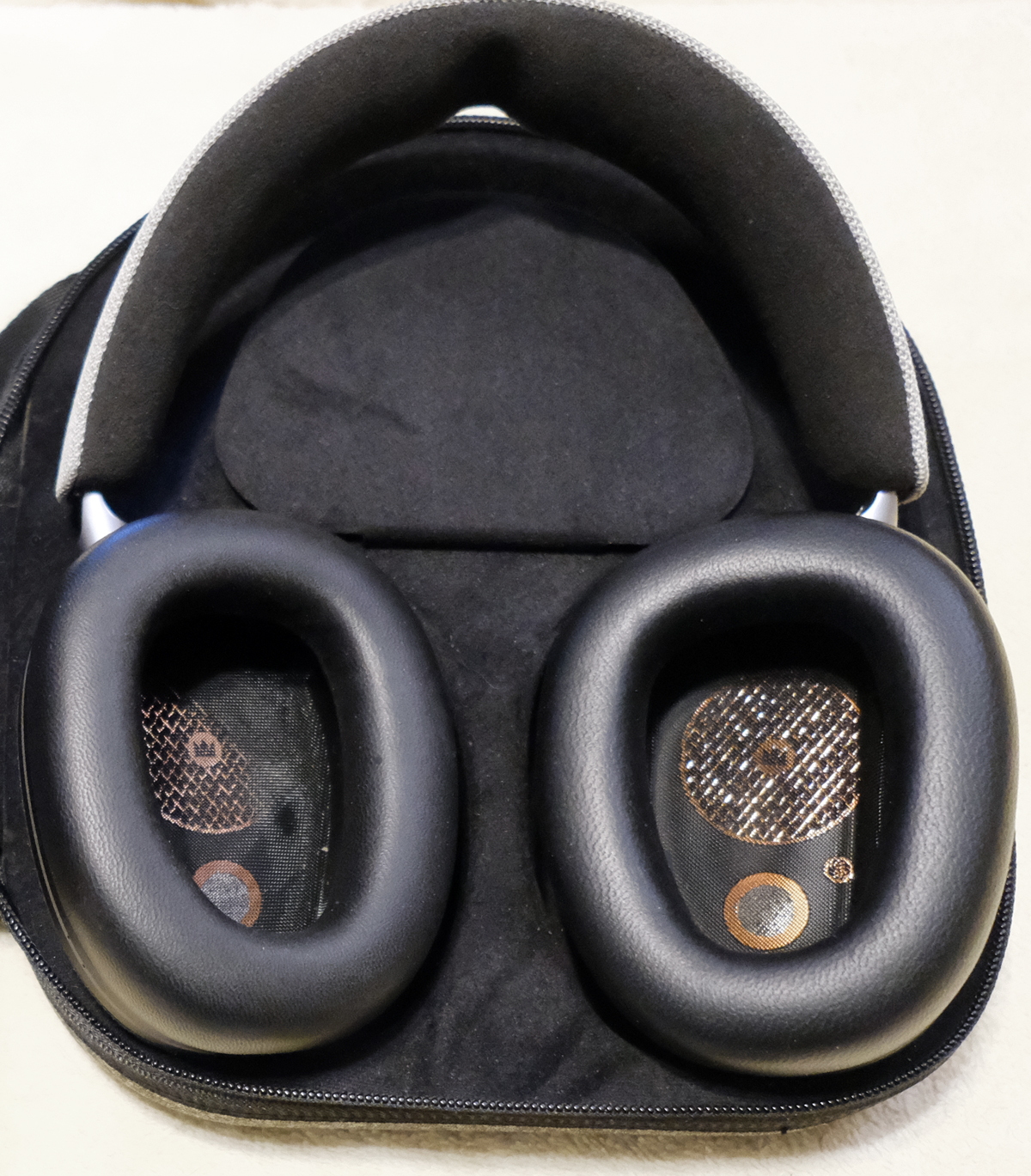
The Noble Audio FoKus ARTEMIS Hybrid True Wireless Headphone is built around an innovative three-driver hybrid architecture combining a dynamic driver, a planar driver, and a balanced armature driver (something unique in modern over-ear headphones, though historically the first headphones were balanced armature). As opposed to most headphones in this price range, Noble eschews the single dynamic or planar (more rare) driver approach employed in most wireless and wired headphones, opting to combine three distinct driver technologies, selected for the qualities they bring to different parts of the frequency range.
Dynamic Driver — Impact, body, and authoritative low-frequency performance.
Planar Driver — Speed, openness, and clarity through the upper midrange.
Balanced Armature Driver — Precision, extension, and high-frequency detail.
The Artemis employs Qualcomm’s QCC3095 platform, supporting Bluetooth 6.0 and advanced wireless codecs including LDAC, aptX Adaptive, and aptX Lossless. USB-C audio and 3.5mm wired listening are also available, providing the flexibility to move between wireless, digital wired, and traditional analog sources.
Taking advantage of multipoint connectivity, the Artemis is able to remain connected to multiple compatible devices, making it easy to move between music, calls, computers, tablets, and smartphones as needed.
Artemis features user-controlled variable Active Noise Cancellation, which allows for adjustment of the amount of outside noise reduction to suit your environment. There is also a transparency mode to provide greater awareness of surroundings when needed, while a seven-microphone design supports calls and voice communication.
As with the Noble FoKus TWS IEMs, Audiodo hearing personalization is available for the Artemis through the Noble FoKus app to evaluate your individual hearing, creating a personal sound profile tailored specifically to your hearing. The app also provides customizable EQ and spatial audio controls, allowing you to further shape its presentation around your music and preferences. The Audiodo profile and EQ settings are stored directly on the headphones, so once configured, your personalized sound remains with the Artemis without the necessity of connecting to the app.
In a departure from all wireless headphones of my experience, the Artemis features a user-replaceable 600mAh battery, allowing for 55+ Hours Playback without ANC, 35+ Hours Playback with ANC, and a charging time of under 1.5 Hours.
Everything about the Artemis speaks of refinement over the Apollo, from the lighter ear-shaped ear cups to the etched metal surface, to the gimbals, to the magnetically attached replaceable ear cushions.
Key Features:
Hybrid Three-Driver System — Dynamic, planar, and balanced armature drivers
Qualcomm QCC3095 — Advanced wireless platform
Bluetooth 6.0 — Modern wireless connectivity
Premium Codec Support — LDAC, aptX Adaptive, and aptX Lossless
Audiodo Personalization — Creates a sound profile tailored to your individual hearing
On-Device EQ Memory — Personalized EQ settings are stored directly on Artemis
Variable Active Noise Cancellation — User-adjustable noise reduction
Transparency Mode — Stay aware of your surroundings when needed
Spatial Audio — App-supported immersive listening for music and movies
Multipoint Connectivity — Connect to multiple compatible devices
USB-C Audio — Digital wired listening
3.5mm Audio Support — Traditional wired listening
Seven-Microphone System — Supports calls and voice communication
55+ Hour Battery Life — Without ANC
35+ Hour Battery Life — With ANC
User-Replaceable Battery — 600mAh battery designed for long-term ownership
Magnetic Replaceable Ear Cushions — Easy maintenance and replacement
IP52 Water Resistance
Living with the Noble Audio FoKus ARTEMIS Hybrid True Wireless Headphone

Connecting to my phone via LDAC, I began my listening with “Memory Bomb” (24-bit/96kHz – Qobuz) by Kiefer (Shackelford); the overall sound was a bit dark, with a slight emphasis in the bass. The piano had a studio Yamaha feel, the bass guitar had an almost electronic character to it, and the kick drum had thump.

I moved quickly on to Joy Oladokun’s “Hope Is A Heavy Thing” (24-bit/44.1kHz – Qobuz), which confirmed the dark, bass-heavy voicing, while the bass was more articulate. The blending of the crossover between the different drivers was seamless, offering a musical midrange with excellent detail.

Next up was “Prokofiev — Villa-Lobos — Poulenc” (24-bit/96kHz – Qobuz) as performed by ORF Radio Symphonieorchester Wien, Simone Menezes conducting. The soundstage was vast and resonant. While the tonal balance was excellent, offering up realistic strings and woodwinds, along with tight tympani, the celli did have an overlarge presence.
I did a quick test of the Active Noise Cancelling, which had zero effect on tonality regardless of setting. Using an in-flight noise simulation on YouTube, I determined that the native isolation was excellent and the ANC, which offered three settings of cancellation, was extremely effective.
My next action was to set up the personal EQ. This tightened up the sound quite a bit when relistening to the above tracks.

For a more clear picture, I turned to my regular playlist https://open.qobuz.com/playlist/10673532, selecting Dario Baldan Bembo performing “Non Mi Lasciare” (16-bit/44.1kHz – Qobuz); the bass was rich and deep, and Dario’s vocal was magnificently musical in a large soundstage.

I followed this up with “And You and I” (24-bit/192kHz – Qobuz) from Yes’ “Close to the Edge”. The intricate tapestry of sound was rendered in a spacious soundstage, with excellent musicality and dynamics. The ARTEMIS brought out subsonic bass notes that often pass unheard.
At this point, I took a moment to test wired performance with the same track, first with the USB-C, where the sound was a little less dark, bass tighter, more linear. Next, via the 3.5mm cable using my reference system: dCS Bartók APEX DAC with Headphone Amplifier (as DAC ), Black Dragon USB Cable, Black Dragon Power Cables, and Core Power Technologies A/V Equi=Core 1000, with the Saros Audio Systems Europa Fully Differential Tube Headphone Amplifier, which I had in for review, and the sound scaled up to match the source, though I did have to be careful not to overdrive the headphone amplifier input.
Conclusion on the Noble Audio FoKus ARTEMIS Hybrid True Wireless Headphone
Without question, the Noble Audio FoKus ARTEMIS Hybrid True Wireless Headphone exceeded my expectations. Out of the box, the ARTEMIS is a bass head’s dream, giving plenty of dynamics, an excellent soundstage, and a good tonal balance, if slightly dark. For audio purists like me, I found the Noble FoKus App took care of any sonic imbalances, making a truly enjoyable headphone with every genre of music.
As over-ear, true wireless, Bluetooth, noise-cancelling headphones, the ARTEMIS are exceptional, and probably the best I have heard. Wired, via USB-C, the ARTEMIS is probably the best experience you are going to get out of a phone. And connected to an external amp via the 3.5mm cable, it will go toe to toe with any headphone in its price range, with the caveat that the internal amplifier limits the usable volume. There is plenty of volume and dynamic range to satisfy most listeners, but for those who are trying to damage their hearing, this is probably not the headphone to accomplish that goal.
As much as I loved the Noble FoKus APOLLO, this is a much more refined offering, and I would have no problems recommending them to anyone seeking a Bluetooth headphone for home or travel.
Price:$899
Manufacturer’s Website: https://nobleaudio.com/products/artemis
Technical Specifications
Driver Configuration
Dynamic Driver: 1 per side
Planar Driver: 1 per side
Balanced Armature Driver: 1 per side
Bluetooth & Connectivity
Bluetooth Version: 6.0
Chipset: Qualcomm QCC3095
Supported Codecs: LDAC, aptX Adaptive, aptX Lossless
Multipoint: Supported
USB-C Audio: Supported
3.5mm Audio: Supported via included cable

Want to join discussion?
Feel free to contribute!